
Idea
State estimation is the art of making confident analyses from noisy data. There are several techniques to achieve this. Some more simple, some more complex. The current industry standard is a variation of Kalman filtering, but other options like least squares, MSE, and particle filtering are also options.
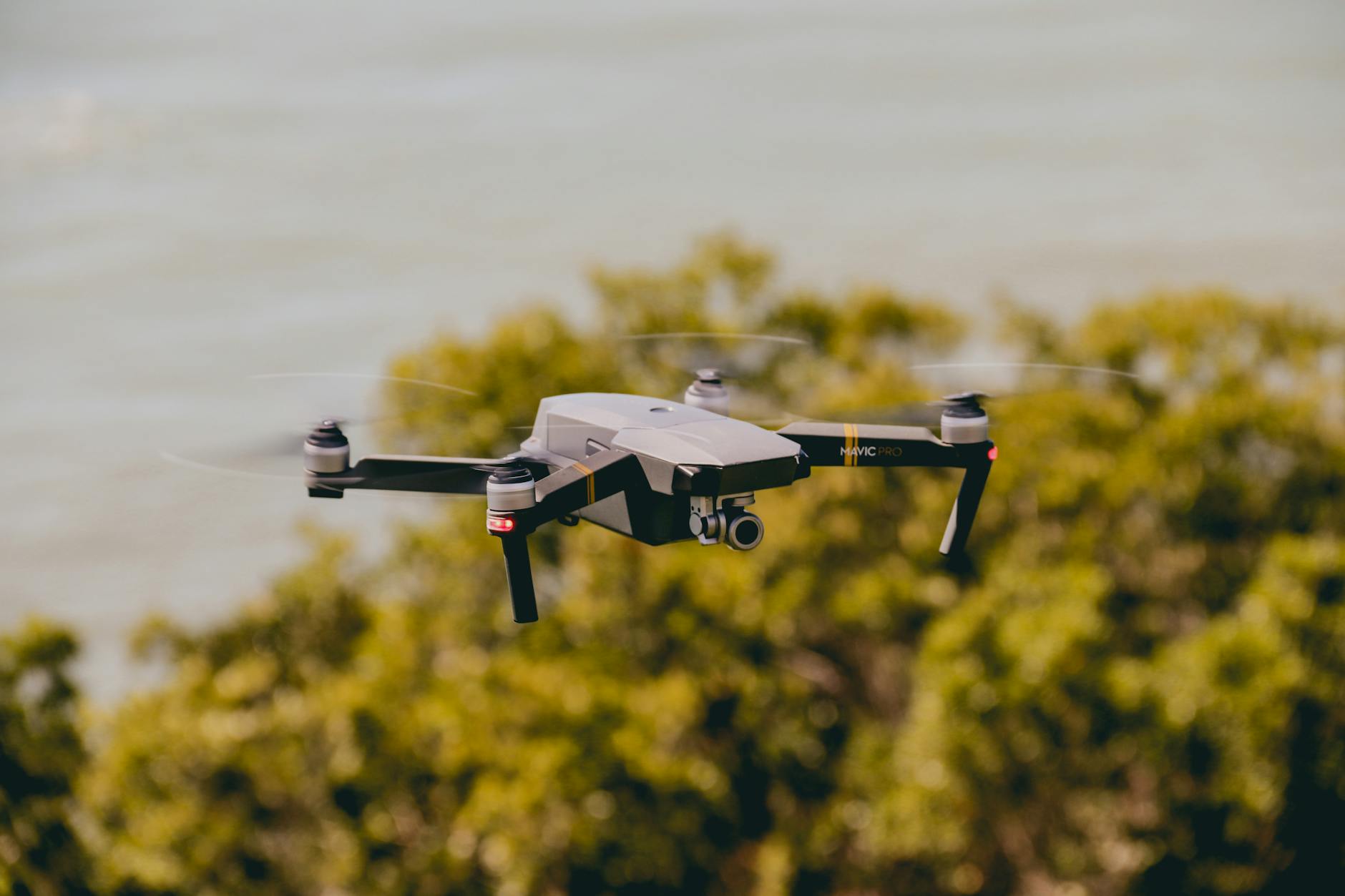
State estimation plays a key role in aerospace and robotics applications, both of which involve noisy sensing (obviously from rocket engines and dynamic environments). Some popular applications include tracking and navigation methods like Simultaneously Localize and Map (SLAM) algorithms in robotics.
This type of sensing requires us to acknowledge noisy and random processes (stochastic), and provides tools to cut through that randomness for a “true” reading which our system can deterministically use.
Governing Equation
Equation
State estimation relies on a governing equation:
This standard form does not require linearity in the dynamics function or the observation function. Instead, either of these functions could be nonlinear. If we continue to discretize and linearize the system, we in general have:
Derivation
which we get the discretized form solving this exact form
through this approxiation
after we drop the delta notation:
Process
Reasoning
In general, x is an unknown set of state variables. This is what we estimate based on our observations recorded in the set of y. This can be tricky to manage, since there is no embedded knowledge of “data richness” to ensure that you’ve succesfully captured all the variation possible in the state.
There are several methods to find the relationship between x and y. These methods embody the work in state estimation! These methods also embed an idea of error estimation, which gives you as the engineer a level of confidence in the measurements themselves from a mathematical framework!
How to Estimate
In general the process follows the following steps:
- Create a dynamic model of the system
- Create an observation model for the system
- Use one of the following methods to estimate the state of the system based on dynamic and observation models.
Methods
- Classical Methods
- Least Squares Approximation
- Least Mean Squared Error Linear
- Least Mean Squared Error Nonlinear
- Filtering Methods
- Vanilla Kalman Filtering
- Extended Kalman Filtering
- Unscented Kalman Filtering
- Particle Methods
- Optimal Transport Applications
Leave a Reply